Product Blog

Website Categorization Explained - Complete Guide For Your Business

Website Categorization Explained - Complete Guide For Your Business

Great attention has been directed lately towards website categorization; a cybersecurity practice which has been around for a while, but it wasn’t until recent times that it started to be increasingly used in marketing and business.

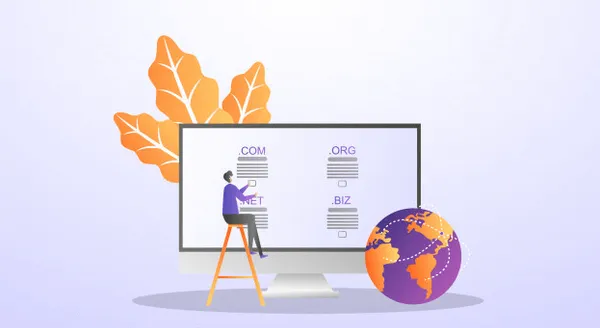
Website categorization is, in essence, the act of putting websites related by their content and function into similar categories. With that in mind, sites like Amazon and Ebay are grouped as Ecommerce sites; CNN, BBC and the likes are classified as news sites; Twitter and Facebook are tagged as social media sites, while Reddit and Quora are Forums (Message Boards) and so on.

However, what some people might not realize is that website categorization is a totally different ball game from Search Engine Optimization and Alexa rankings. Each is different and should be approached in that light – and not be confused.

Check a Website’s Reputation with Website Categorization API and Other Tools

Check a Website’s Reputation with Website Categorization API and Other Tools

In an era riddled with highly skilled threat actors and sophisticated attack methods, determining whether you can safely access a website or not is critical. After all, the only certain way of preventing a breach is to keep well away from every potential threat source online, including anywhere inappropriate you may land on the Web.

With that purpose in mind, this long-form article presents four case studies on how Website Categorization API, in conjunction with other domain and IP data feeds and APIs, can help organizations avoid the pitfalls that come with visiting harmful web pages.

  • Check Website Trust or Land in a Sea of Trouble
  • How to Check Domain Name Availability and Safety
    How to Check Domain Name Availability and Safety

    How to Check Domain Name Availability and Safety

    One of the most important moments of building your online presence is creating the name of your domain. In the digital sphere, the domain is your address and your identity. Before you settle for a domain, however, you have to jump through a few hoops.

    You may think of a perfect name only to discover that it’s already taken or too similar to another brand’s domain. You may find that the perfect domain name is available but you cannot afford it. So how do you find the middle ground between originality, availability and affordability? More importantly, how do you avoid winding up with a domain name you may regret? With a little bit of brainstorming and research. We’ll show you how.

    What are the benefits of web filtering for businesses?
    What are the benefits of web filtering for businesses?

    What are the benefits of web filtering for businesses?

    Content filtering is the practice of restricting access to a broad category of content or specific websites based on their purpose. There are many reasons why companies use content filtering – from boosting cybersecurity to dealing with workplace productivity.

    One of the most important prerequisites to efficient content filtering is being able to properly classify domains and websites that are malicious or inappropriate. This is not an easy task, so you have to be rigorous when deciding which tool to use for content filtering.

    In this article, we’ll talk about all the benefits of content filtering and the multifaceted tools you need for this.

    How to Check & Improve the Reputation of Your Domain

    How to Check & Improve the Reputation of Your Domain

    It has never been easier to build a website and online business. You can create a site from scratch and start promoting and selling your product in a matter of hours. Amazing as this is, such convenience also has a dark side. Cyber-criminals can do that just as easily. They can infect your website with malware or mimic its appearance to lure your unsuspecting customers. Running a website became a technically challenging matter: web server software, content management systems and other digital tools all have their vulnerabilities. There are malicious requests impinging at every website in every minute looking for the possibility of taking control over it. One successful attack could destroy your business completely.

    What is email verification and why is it important?
    What is email verification and why is it important?

    What is email verification and why is it important?

    Email verification is the process of confirming that the email address is valid and deliverable. This is important for plenty of business activities: email marketing, cold outreach and professional correspondence. If you want to achieve your business goals, you have to make sure your messages are reaching their recipients.

    There are dozens of ways to check whether the email addresses on your list are valid. The simplicity of these methods and degrees of their reliability vary greatly.

    We will explain each of them in greater detail and yes – we will show you the simplest, most reliable solution for email verification. Before that, we’ll discuss the basics of good email practices, both in business correspondence and email marketing.

    Why Your Business Needs Website Categorization Right Now
    Why Your Business Needs Website Categorization Right Now

    Why Your Business Needs Website Categorization Right Now

    Website categorization is a term that may not seem too glamorous or super powerful at first glance. Classifying websites based on content and objective doesn’t strike fear or awe, yet if you’re a marketer or business owner, we dare you to stick around and learn more about this interesting method of scanning your online surroundings. We guarantee that, by the end of this story, you’ll change your mind about website categorization.

    It is one of the most versatile and powerful tools you can acquire on your journey towards business success. Website categorization allows you to protect your website, company, and brand, find your target audience, keep tabs on your marketing strategy, and much, much more.

    4 Disadvantages of Bad Publicity (and How to Deal with Them)
    4 Disadvantages of Bad Publicity (and How to Deal with Them)

    4 Disadvantages of Bad Publicity (and How to Deal with Them)

    “There is no such thing as bad publicity.” We’ve all heard this common PR adage. While bad publicity may work wonders for pop stars, for business owners it is a serious liability. The disadvantages of bad publicity are numerous and include plummets in sales, decreased customer retention, difficulties in talent acquisition, as well as a bad brand image.

    Thanks to the rise of social media, bad publicity is much easier to produce and make go viral. It no longer comes only from mass media – any bad review of your product or service could be considered bad publicity. Here’s how unchecked bad buzz can harm your business and a few tips on how to deal with it.

    Try our WhoisXML API for free

    Get Started

    Have questions?

    We are here to listen. For a quick response, please select your request type. By submitting a request, you agree to our Terms of Service and Privacy Policy.

    Sales
    Technical Support
    Account issues
    Product customization

    Message sent!

    We'll contact you shortly.

    Oops!

    Something went wrong. Contact us via regular email.